Why Cosmetic IDs Matter
Every cosmetic page on forlocker.click shows an ID row — a string like CID_028_Athena_Commando_F or Character_AbstractMirror_Rogue. That is the item's internal name in the game files. Names get translated, renamed and occasionally reused; IDs do not. forlocker keys its entire catalogue on them, and the ID is also baked into every page URL on this site, so a bookmark survives a rename.
CID, BID, Pickaxe & Other Prefixes
The prefix tells you the slot. The most common prefixes among the outfits, back blings, pickaxes, gliders and emotes in the forlocker catalogue:
| Prefix | Slot | Items |
|---|---|---|
Pickaxe_ | Pickaxe | 2,366 |
EID_ | Emote | 2,178 |
Backpack_ | Back Bling | 1,655 |
Character_ | Outfit | 1,552 |
CID_ | Outfit | 1,505 |
BID_ | Back Bling | 1,049 |
Glider_ | Glider | 664 |
Umbrella_ | Glider | 88 |
Gadget_ | Back Bling | 6 |
EId_ | Emote | 2 |
CID_/Character_- Outfits.
CID_(“character ID”) is the Chapter 1–2 scheme with a running number;Character_is the newer codename scheme. BID_/Backpack_- Back blings, same old/new split.
Pickaxe_ID_/Pickaxe_- Pickaxes.
Glider_ID_/Glider_/Umbrella_- Gliders; umbrellas are the seasonal first-win gliders.
EID_- Emotes — one of the few prefixes that never changed.
Naming Patterns
Old-scheme IDs are descriptive. CID_028_Athena_Commando_F reads as: character number 28, Battle Royale (“Athena” was the internal codename for the mode), commando body type, female model. The number is release order within the scheme, so a low CID_ number is a Chapter 1 item. Suffixes name the theme (_Halloween, _Skeleton) and sometimes the style (_Fire, _Gold).
New-scheme IDs use project codenames chosen before the item is announced: Character_AbstractMirror_Rogue is Solid Snake. Codenames are deliberately opaque, but they leak structure: items that share a middle token were made together and almost always belong to the same set, and a shared token across slots (Character_Foo, Backpack_Foo, Pickaxe_Foo) is the surest sign of a complete set even before the game shows the “Part of the … set” line.
IDs also expose re-releases. When an old item comes back reworked it gets a new ID — which is why two pages on forlocker.click can have the same display name with different URLs, and why forlocker never merges them.
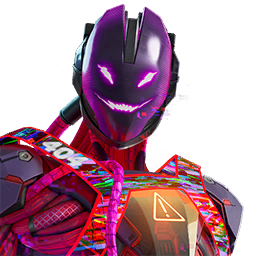
Compare a few outfits in this index and their IDs: Nitemare Hack (Character_InfoInvader), Hazard Agent (CID_128_Athena_Commando_F_Hazmat), Florin (Character_AsterOrder), Alpine Ace (CID_053_Athena_Commando_M_SkiDude).
Using IDs to Track Cosmetics
On forlocker the ID is a working handle, not trivia:
- URLs. Every item page lives at
/skins/<name-slug>-<id>/. The slug is for people; the lowercase ID at the end is what makes the address unique and permanent. - Search. Paste an ID into a web search together with “forlocker” and you land on the exact entry even if the display name was changed or translated.
- Disambiguation. Same-named items (there are several “Recruit” outfits, for instance) are told apart only by ID.
- Cross-referencing. Shop data, style data and set data all reference the same IDs, which is how forlocker.click joins them onto one page without guesswork.
IDs are shown exactly as they appear in the game data, including capitalisation; URLs use the lowercase form.